Latest briefs Browse latest →
Bills Without a Signature
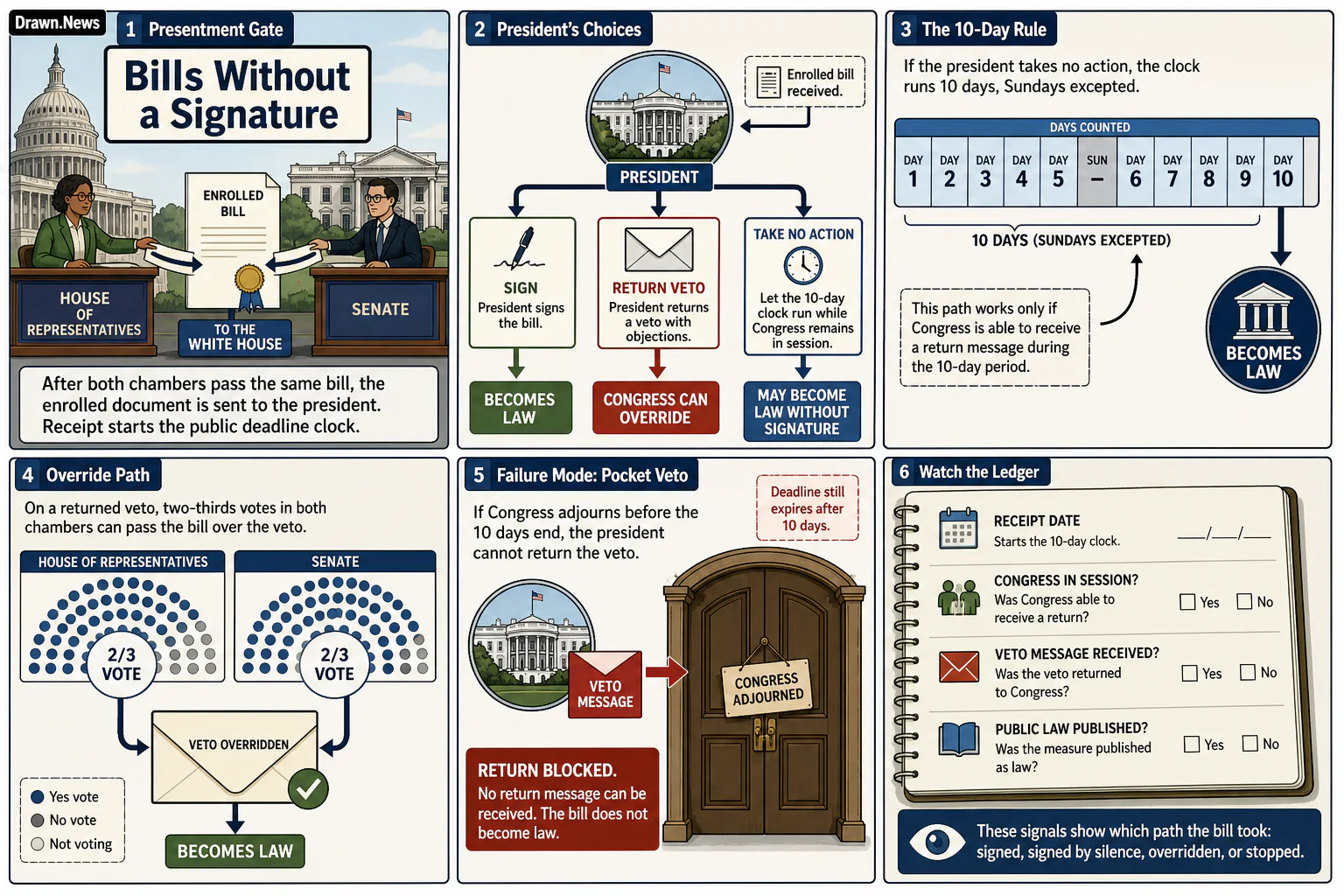
A U.S. bill can become law after House and Senate passage when the enrolled bill reaches the president, the 10-day clock runs without a signed approval or returned veto, and Congress remains able to receive a return message.
Full visual brief
Follow the story
Sources & verification
Sources behind this guide, checked before publication.
Brief text
A U.S. bill can become law after House and Senate passage when the enrolled bill reaches the president, the 10-day clock runs without a signed approval or returned veto, and Congress remains able to receive a return message.
- Frame 1Presentment gate: Congress turns a bill into federal law only after the enrolled document reaches the White House, starting the public deadline.
- Frame 2Choice diagram: the president can sign, return a veto, or let the 10-day clock keep running while Congress can receive objections.
- Frame 3Timeline rule: 10 days, Sundays excepted, converts silence into law unless adjournment blocks a return message.
- Frame 4Override path: two-thirds votes in both chambers route a vetoed bill through a vote board and back into law.
- Frame 5Failure mode: adjournment can create a pocket-veto stop, preventing return and leaving the unsigned document outside the law.
- Frame 6Watch ledger: receipt date, adjournment status, veto message and public-law publication reveal which path happened.
How this was checked
- Reporting
- Cross-checked across 3 sources
- Claims
- We checked the names, dates, numbers, and core facts against the reporting linked above
- Artwork
- This is an editorial illustration based on the reporting, not source photography
- Published
- Jul 10, 8:16 PM EDT
- Our standards
- Editorial standards and corrections