Latest briefs Browse latest →
Filling a Senate Vacancy
A U.S. Senate vacancy moves through the Seventeenth Amendment, state law, an interim appointment or special election, and the Senate’s seating process. The key constraint is that states set the replacement rules.
Full visual brief
Follow the story
Sources & verification
Sources behind this guide, checked before publication.
Brief text
A U.S. Senate vacancy moves through the Seventeenth Amendment, state law, an interim appointment or special election, and the Senate’s seating process. The key constraint is that states set the replacement rules.
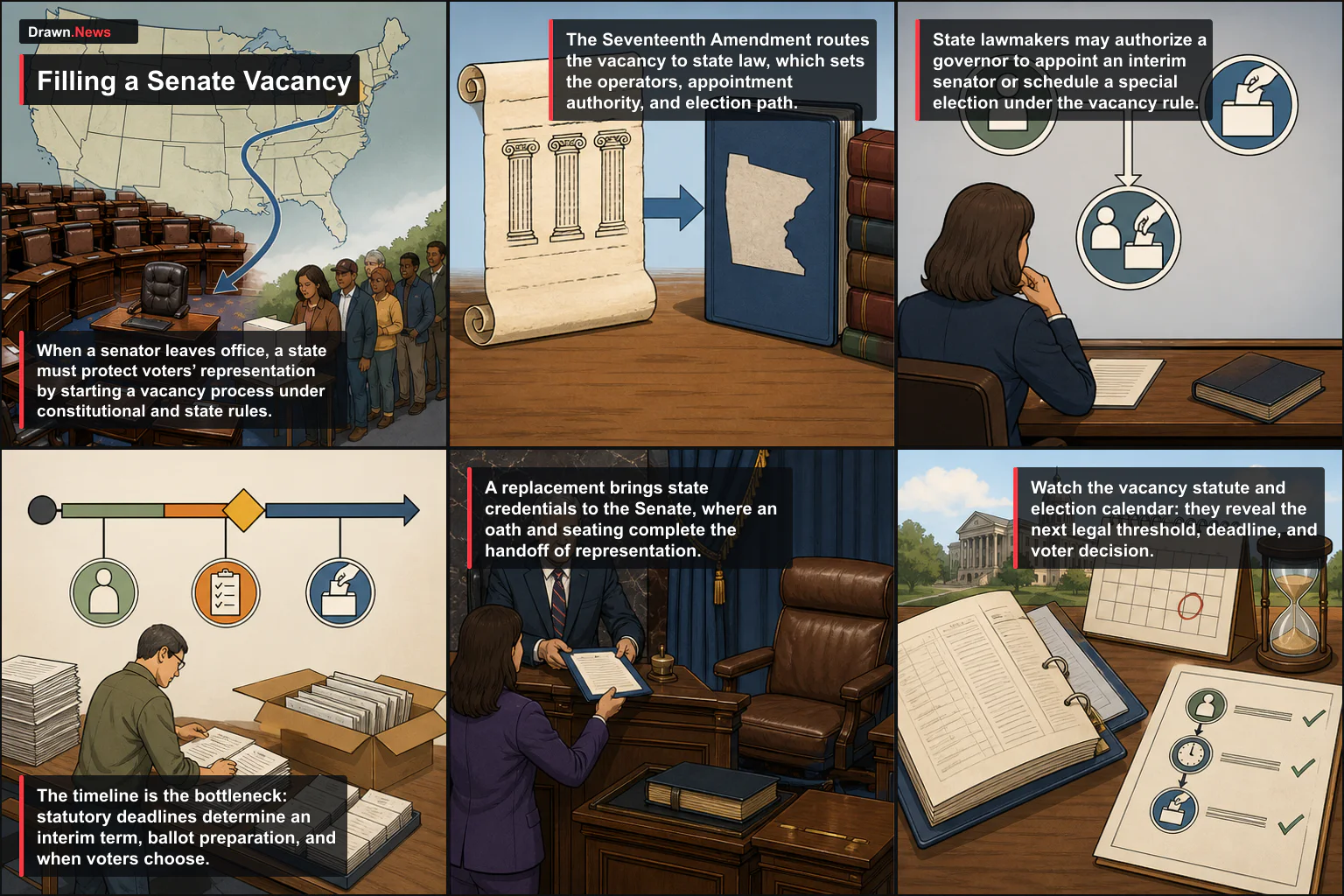
- Frame 1When a senator leaves office, a state must protect voters’ representation by starting a vacancy process under constitutional and state rules.
- Frame 2The Seventeenth Amendment routes the vacancy to state law, which sets the operators, appointment authority, and election path.
- Frame 3State lawmakers may authorize a governor to appoint an interim senator or schedule a special election under the vacancy rule.
- Frame 4The timeline is the bottleneck: statutory deadlines determine an interim term, ballot preparation, and when voters choose.
- Frame 5A replacement brings state credentials to the Senate, where an oath and seating complete the handoff of representation.
- Frame 6Watch the vacancy statute and election calendar: they reveal the next legal threshold, deadline, and voter decision.
How this was checked
- Reporting
- Checked against 3 official sources
- Claims
- We checked the names, dates, numbers, and core facts against the reporting linked above
- Artwork
- This is an editorial illustration based on the reporting, not source photography
- Published
- Jul 13, 8:12 PM EDT
- Our standards
- Editorial standards and corrections