Latest briefs Browse latest →
EV Battery Recycling, Explained
An electric-vehicle battery moves from collection and safety handling through diagnosis, reuse or disassembly, material recovery, and refining. Economics, chemistry, transport rules, and design for disassembly determine whether its critical materials return to the supply chain.
Full visual brief
Follow the story
Sources & verification
Sources behind this guide, checked before publication.
Brief text
An electric-vehicle battery moves from collection and safety handling through diagnosis, reuse or disassembly, material recovery, and refining. Economics, chemistry, transport rules, and design for disassembly determine whether its critical materials return to the supply chain.
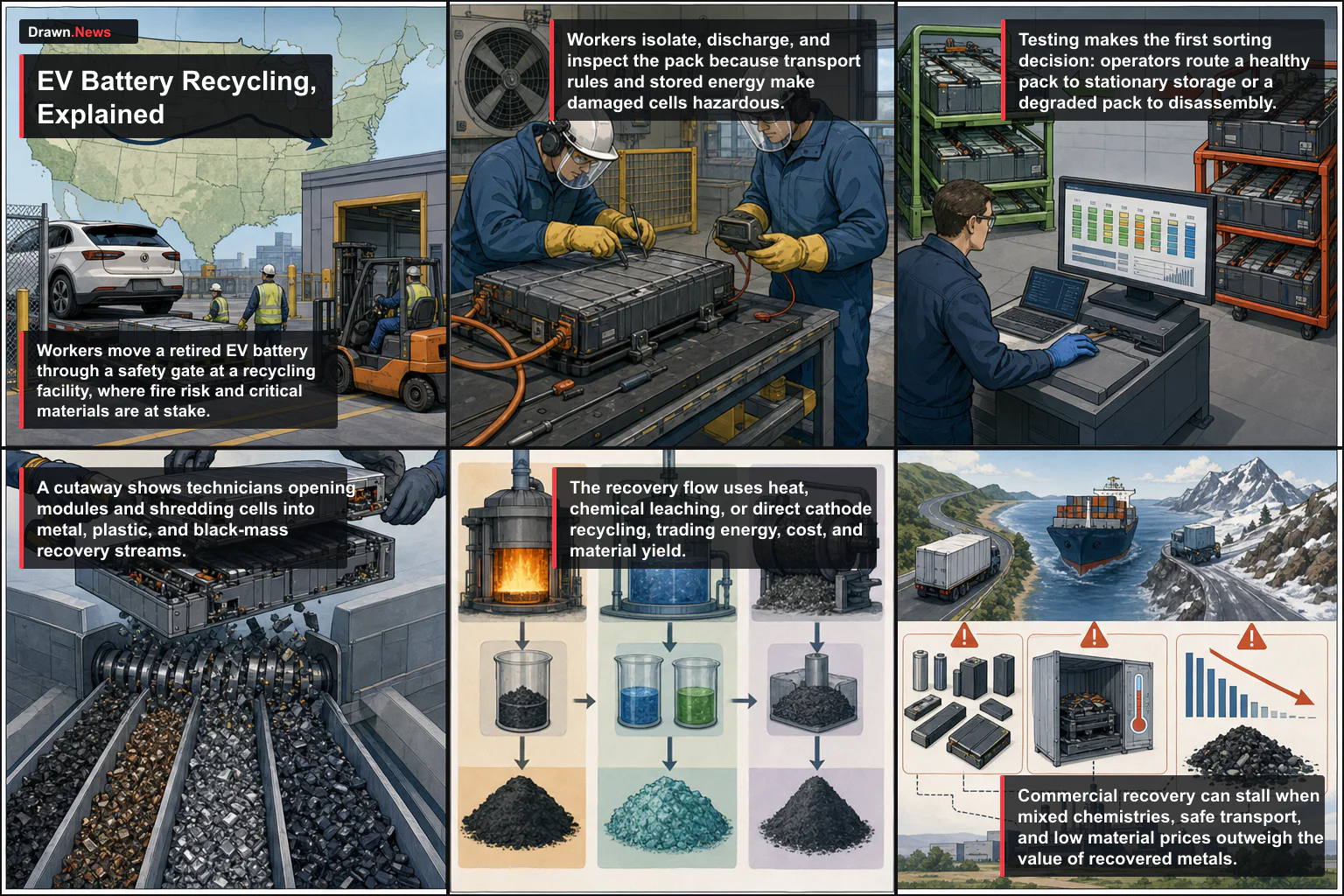
- Frame 1Workers move a retired EV battery through a safety gate at a recycling facility, where fire risk and critical materials are at stake.
- Frame 2Workers isolate, discharge, and inspect the pack because transport rules and stored energy make damaged cells hazardous.
- Frame 3Testing makes the first sorting decision: operators route a healthy pack to stationary storage or a degraded pack to disassembly.
- Frame 4A cutaway shows technicians opening modules and shredding cells into metal, plastic, and black-mass recovery streams.
- Frame 5The recovery flow uses heat, chemical leaching, or direct cathode recycling, trading energy, cost, and material yield.
- Frame 6Commercial recovery can stall when mixed chemistries, safe transport, and low material prices outweigh the value of recovered metals.
How this was checked
- Reporting
- Cross-checked across 2 sources
- Claims
- We checked the names, dates, numbers, and core facts against the reporting linked above
- Artwork
- This is an editorial illustration based on the reporting, not source photography
- Published
- Jul 13, 12:11 PM EDT
- Our standards
- Editorial standards and corrections