Latest briefs Browse latest →
Populism After Brexit
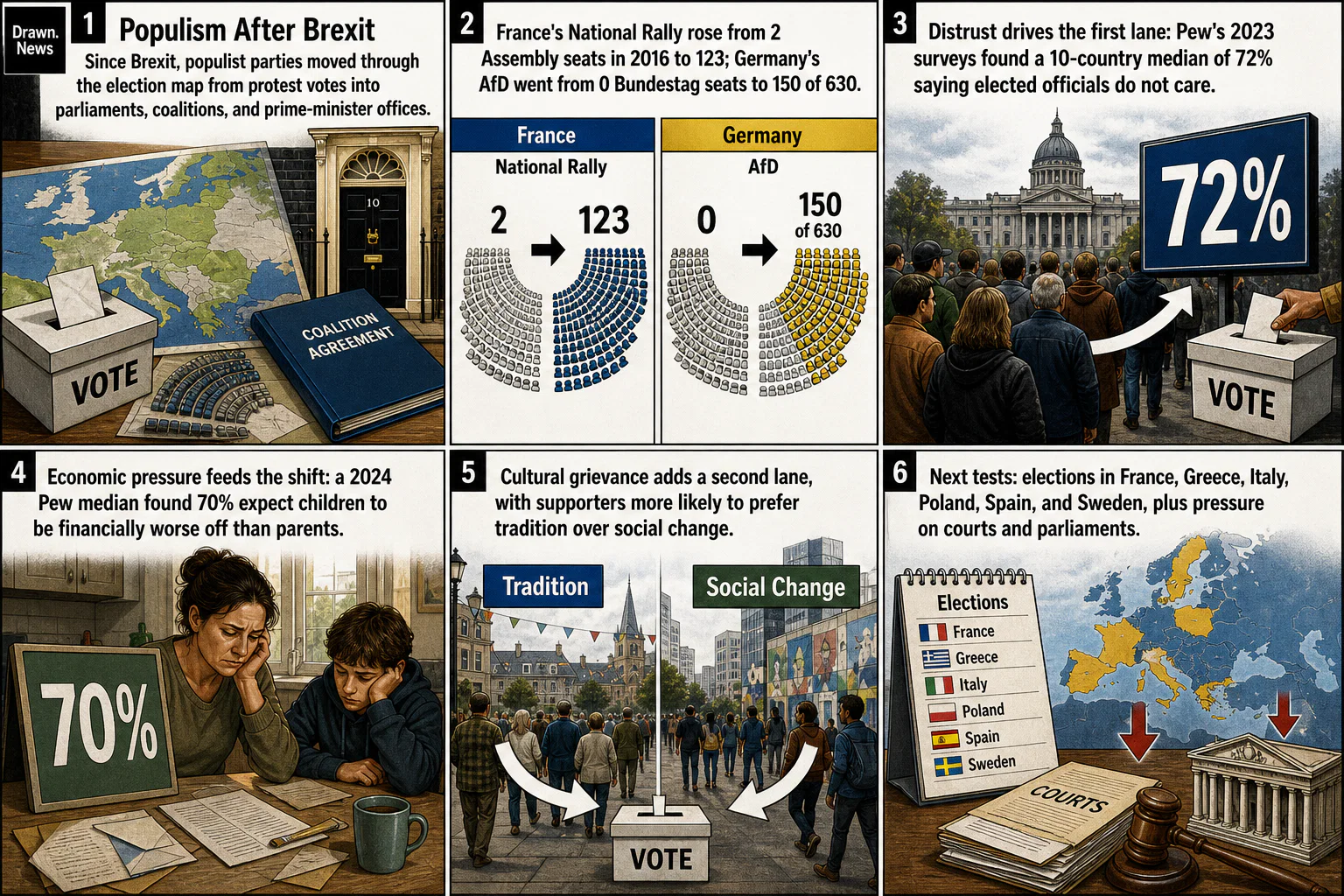
Since Brexit, populist parties have moved through the election map from protest votes into parliaments, coalitions, and prime-minister offices
Full visual brief
Follow the story
Sources & verification
Reporting behind this brief, checked before publication.
Brief text
Pew Research Center traces how right-wing populist parties moved from Brexit-era backlash into a regular force in European elections, parliaments, coalitions, and governments, with distrust, economic pessimism, cultural grievance, and strong-leader attitudes as the main mechanism.
- Frame 1Since Brexit, populist parties have moved through the election map from protest votes into parliaments, coalitions, and prime-minister offices.
- Frame 2The scale changed: France's National Rally rose from 2 Assembly seats in 2016 to 123, while Germany's AfD went from 0 Bundestag seats to 150 of 630.
- Frame 3The first driver is distrust: Pew's 2023 surveys found a 10-country median of 72% saying elected officials do not care what people like them think.
- Frame 4Economic pressure feeds the shift: a 2024 Pew median found 70% expect today's children to be financially worse off than their parents.
- Frame 5Cultural grievance adds another lane, with party supporters more likely than nonsupporters to prefer tradition over social change.
- Frame 6The next test is elections in France, Greece, Italy, Poland, Spain, and Sweden, plus whether strong-leader politics keeps pressing courts and parliaments.
How this was checked
- Reporting
- Checked against the primary source
- Claims
- We checked the names, dates, numbers, and core facts against the reporting linked above
- Artwork
- This is an editorial illustration based on the reporting, not source photography
- Published
- May 29, 2:48 PM EDT
- Our standards
- Editorial standards and corrections